
I was recently biking past a favorite park of mine in Toronto, along Grace Street, and noticed the roads—which had been ripped up for ages—were finally complete. I’m sure you’ve had a similar experience: going for a stroll, looking up, and seeing a new community center or bridge that’s appeared or been repaired. Then going, “Wow! Where did that come from?”
I say this partly in jest—if you’re here, it’s probably because you are working in local government and are in fact very aware of where “that” came from! Go to any city or town and you’ll find that something is being changed, added, renovated, or repaired; meaning, you’ll find capital improvement plans underway.

Capital improvement planning is a vital process for local governments. It ensures that infrastructure and public facilities meet the current and future needs of the community.
A well-crafted capital improvement plan (CIP) not only addresses immediate requirements but also anticipates growth, technological advancements, and sustainability.
But here’s the thing: CIPs are complex.
Done well, with excellent communication, proper resourcing, expectation management, clear timelines, and a spirit of community engagement, they’re a total game changer for building resident trust and improving quality of life. A good CIP can demonstrate local government in action. It’s one thing to promise a new roadway, recreation center, aquatics facility, etc.; it’s quite another to explain why it’s going to be better, set expectations, and show the work along the way.
At their best, capital improvement plans can build community trust through well-informed and clearly articulated plans for tangible action.
At their worst… well, that’s another story.
Some CIPs are executed hastily. Some are not adequately resourced, and others are a surprise to the community (or some awful combination of all three!). This can be disastrous for building trust and getting anything done. We know it is not possible to please everyone, but it is not a stretch to suggest that there is often a high degree of mistrust and even animosity when it comes to community projects that seem to drag out forever, impacting businesses, livelihoods, and potentially eroding a sense of safety and trust in government.
In this post, we are going to look at what makes a CIP really work. We’ll explore a couple of leading examples from our own customer base, and show that when it comes to capital improvement and major projects, transparency and communication are key.
Understanding the Basics of Capital Improvement Planning
A capital improvement plan is a multi-year (typically 5–10 years, but sometimes longer) roadmap that outlines a local government’s intentions for public facility and infrastructure investments. They can include:
- Roads and bridges
- Water and sewer systems
- Parks and recreation facilities
- Animal services
- Public buildings (e.g., schools, public health buildings, libraries, municipal offices)
Ideally, a CIP prioritizes projects based on need, funding, and community benefit—ensuring resources are allocated effectively.
Tip 1. Acknowledge Differences in Process: A Capital Improvement Plan Is Not a Strategic Plan
When we talk about aligning resources, we don’t mean collapsing all planning into a single process.
A strategic plan sets the vision and direction for a community, but a Capital Improvement Plan requires its own distinct approach. The Government Finance Officers Association (GFOA) helpfully outlines the similarities and differences in planning approaches.
Both processes require—and should strive for—organizational alignment. That said, a strategic plan is primarily about high-level goals, vision-setting, and broad assessments of where an organization is today.
A CIP, on the other hand, gets into the specifics of resourcing: defining the work required, managing debt and long-term capacity, assessing risk, and accounting for liabilities.
These features of developing a strong CIP make silo-busting more important than ever. The people developing a CIP may overlap with those working on the strategic plan—but not always. And even when they do, they may not fully understand each other’s constraints or capacities.
Tip 2. Engage Relevant Parties Early and Often
Proactivity is the name of the game. Engaging those who will deliver the plan—or live through the construction and its outcomes—is critical. Not just for the success of the project itself, but for future projects as well.
Broad, cross-functional, and cross-sector engagement helps surface concerns early and fosters a stronger sense of ownership and collaboration.
Community involvement, internal coordination, and political leadership are all essential to a successful CIP.
In the next sections, we’ll look at how proactive involvement across these three areas helps identify issues early, streamline decision-making, and improve transparency—leading to more informed and sustainable outcomes.
Community Involvement
Engaging the community is essential. Inviting feedback can sometimes be frustrating, but community engagement is one of the most powerful drivers of a successful CIP. Research from Alliance for Innovation and our partners at Polco shows that trust in government is at an all-time low. This affects every part of the public-sector process—no one, especially political leaders, is untouched by declining trust.
Rebuilding trust is complex. One meaningful step is keeping the community informed throughout the CIP process.
Public meetings, surveys, and workshops are effective ways to gather input. Residents should have opportunities to ask questions, share perspectives, and learn. Knowledge is power—people tend to feel more comfortable when they understand what’s happening and why decisions are being made. Surveys and outreach also provide valuable insight into community priorities, helping ensure the CIP reflects a shared vision.
Interdepartmental Coordination
All relevant municipal departments—public works, parks and recreation, planning, finance, and others—should be involved in the planning process. Collaboration helps uncover overlapping needs and opens the door to more integrated solutions.
Political Leadership
Leaders should be kept informed throughout the process. Their support is essential for approving and funding the CIP. While buy-in can be challenging, it’s often strengthened through clear, accessible information backed by data-driven decision-making.
Example of Community Engagement: Bloomington, Minnesota
The City of Bloomington undertook an extensive process of transparency and community engagement while developing both their strategic plan and a major capital improvement effort: the Park System Master Plan.
Online, in-person, workshops, and more—Bloomington did it all.
Feedback was gathered from hundreds of residents during community conversations held in nine parks. Input from these in-person events, along with online feedback collected through a dedicated community engagement portal, Let’s Talk Bloomington, proved invaluable in shaping the next steps of the planning process.
This was a deliberate and comprehensive process, grounded in resident voices and supported by multiple studies to better understand how park amenities and experiences could be enhanced.
The result? A clear roadmap for guiding capital investments—one that genuinely reflects community priorities.
The new plan prioritizes natural resources, trails, new amenities, and equity. Importantly, adoption didn’t signal the end of community involvement. The Park System Master Plan serves as a guiding document, with ongoing public input continuing as new projects and individual park plans move forward.
Tip 3. Conduct a Comprehensive Needs Assessment
Another way to set your CIP up for success is by ensuring a careful, data-supported assessment of current infrastructure conditions and future needs. This includes:
- Asset Inventory: Catalog existing infrastructure and public facilities, noting their condition, age, and expected lifespan
- Risk Assessment: Identify vulnerabilities related to aging infrastructure, natural disasters, or shifting demographics
- Growth Projections: Use data-driven models to forecast population growth and economic development, helping guide long-term planning
Tip 4. Prioritize Projects Carefully (And Identify Funding Sources)
We wish local governments had infinite resources, but budget constraints mean not all projects can move forward at once. Prioritization should consider:
- Urgency: Projects addressing safety concerns or legal mandates should take precedence
- Community Impact: Evaluate how projects will improve residents’ quality of life
- Economic Benefit: Consider initiatives that spur economic development or deliver long-term cost savings
- Feasibility: Assess technical and financial viability to ensure projects are realistic and achievable
This prioritization process is key to developing a realistic resource allocation plan. Contingency funds should also be included to cover unexpected expenses—because, unfortunately, sometimes the saying is true: if it can go wrong, it will.
Example of Funding Sources: City of Ontario, California
We recently covered innovative moves from the City of Ontario, including how the city successfully brought a 1% sales tax—known as Measure Q—to the ballot. The measure is expected to generate an estimated $95 million in revenue to help fund major projects and plans.
A flagship example of one of these major projects and plans is the Ontario Sports Empire. In 2023–2024, the City purchased the future Sports Empire site, securing the land needed to develop what will become the largest multi-use sports complex on the West Coast.
Construction is now underway and will continue through 2028, beginning with extensive site preparation, grading, and infrastructure installation across the nearly 200-acre campus.
The City of Ontario has also been transparent about the types of projects Measure Q could help fund. Key focus areas include improved drinking water access and flood control, as well as city-wide fiber internet services.
“We’ve been able to move forward with so many initiatives, partly due to a new sales tax measure that we just initiated called Measure Q.” — Ria Pavia, Deputy Director of Innovation, Performance, and Audit, City of Ontario
Tip 5. Integrate Sustainability and Resilience
Modern CIPs should incorporate sustainability and resilience principles to address environmental concerns and improve infrastructure durability. Consider:
-
Green Infrastructure:
Projects that reduce environmental impact, such as permeable pavements and green roofs -
Climate Resilience:
Infrastructure designed to withstand extreme weather events and long-term climate impacts -
Energy Efficiency:
Incorporating energy-efficient technologies to reduce operating costs and environmental footprint
Tip 6. Maintain Transparency and Accountability
We often say that government moves at the speed of trust. That reality is especially visible when it comes to a CIP.
We’ve already discussed the importance of creating avenues for feedback and engagement. Here, we want to focus on the specifics of communication, transparency, and accountability.
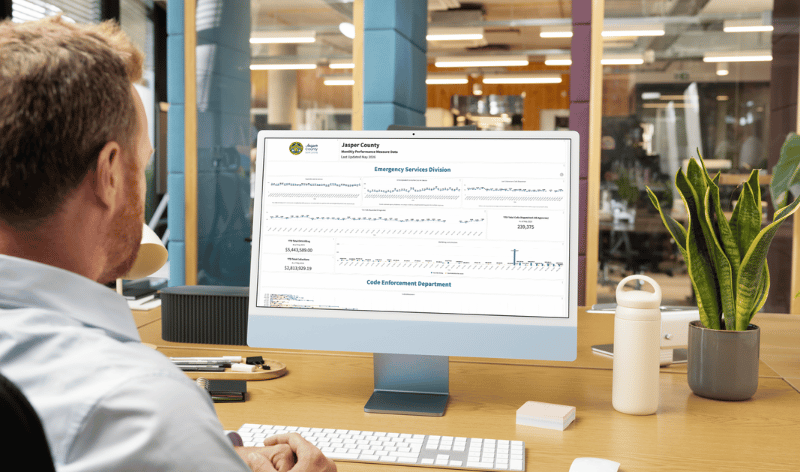
Maintaining transparency and accountability in a CIP is essential. It builds public trust and helps ensure the responsible use of public funds. This often means regularly updating the community on project progress through public reports, meetings, and digital platforms.
Everyone knows a healthy relationship requires good communication—and local government is no exception.
Ideally, there is a steady flow of information that keeps residents informed about how resources are being used. By openly sharing project timelines, budgets, and outcomes, local governments can demonstrate accountability, encourage public participation, and build long-term support.
Here are some practical steps for improving transparency and accountability when it comes to capital improvement plans:
-
Establish clear, relevant performance metrics for completed projects.
These might include completion timelines, budget adherence, and community satisfaction—providing clear benchmarks for evaluating success and identifying areas for improvement. -
Regularly review and update the CIP.
Priorities change, opportunities emerge, and lessons are learned. While strategic plans and CIPs serve different purposes, they must remain aligned to stay responsive to community needs. -
Use a dedicated public-sector CIP project management tool.
Tools like Envisio’s public-sector project management feature support centralized tracking, budget management, and communication—making it easier to maintain a transparent and accountable process.
Example of Transparency and Rigorous Tracking: City of Denton, Texas
The City of Denton, Texas, is a great example of what transparency and performance tracking can look like in practice. Their Envisio public dashboard provides real-time updates on major projects, making it easy for residents to see how funds are being used and how work is progressing.
This level of visibility helps build community trust and keeps projects aligned with broader plans. It also enables the city to evaluate success using concrete measures such as timelines, budgets, and resident satisfaction.
Much of Denton’s CIP work appears under their “Enhance Infrastructure and Mobility” pillar, though capital projects are woven throughout the plan. Below is a short sample of completed initiatives:
Plan for Infrastructure Needs:
Engaged a third party to evaluate cost-effective approaches to road improvements and long-term financial planning.
Improve Capital Project Planning and Communication:
Strengthened project delivery processes and communication tools to support transparency and clarity.
Develop Bond Program for FY 2022–23:
Established a Citizen Bond Committee to guide investments focused on quality-of-life and facilities projects.
Conduct Facilities Master Plan:
Created a strategic framework to guide the development and long-term maintenance of city facilities.
And here are a few CIP initiatives currently in progress:
Develop New Fleet Services Facility at Solid Waste:
Designing a new facility to support expanding operations.
Renovate Municipal Facilities and Upgrade City Hall:
Improvements to support city operations and staff growth.
Improve Aquatics Facilities:
A $425,000 budget request for renovations and efficiency upgrades.
Revamp Downtown Drainage System:
Flood mitigation projects focused on drainage enhancements and new infrastructure.
As we said—this is only a very, very short snapshot of what’s underway.
Capital Improvement Plans and Managing Expectations
A well-designed Capital Improvement Plan is a cornerstone of effective local governance. Creating space for engagement, prioritizing thoughtfully, and breaking down silos all contribute to stronger CIPs—ones that enhance infrastructure, support economic development, and improve residents’ quality of life.
Transparent and accountable processes help ensure that capital improvement plans remain aligned with community needs and expectations.
Really, the biggest takeaway here is the importance of managing expectations.
When done poorly, CIPs can hinder community development, drain financial resources, and erode public trust in local government. Staying focused, prioritizing wisely, and clearly showing progress can make a meaningful difference—laying the groundwork for a thriving, resilient community.